Christmas Lights in Bristol: Discover the Stories Behind the Stars

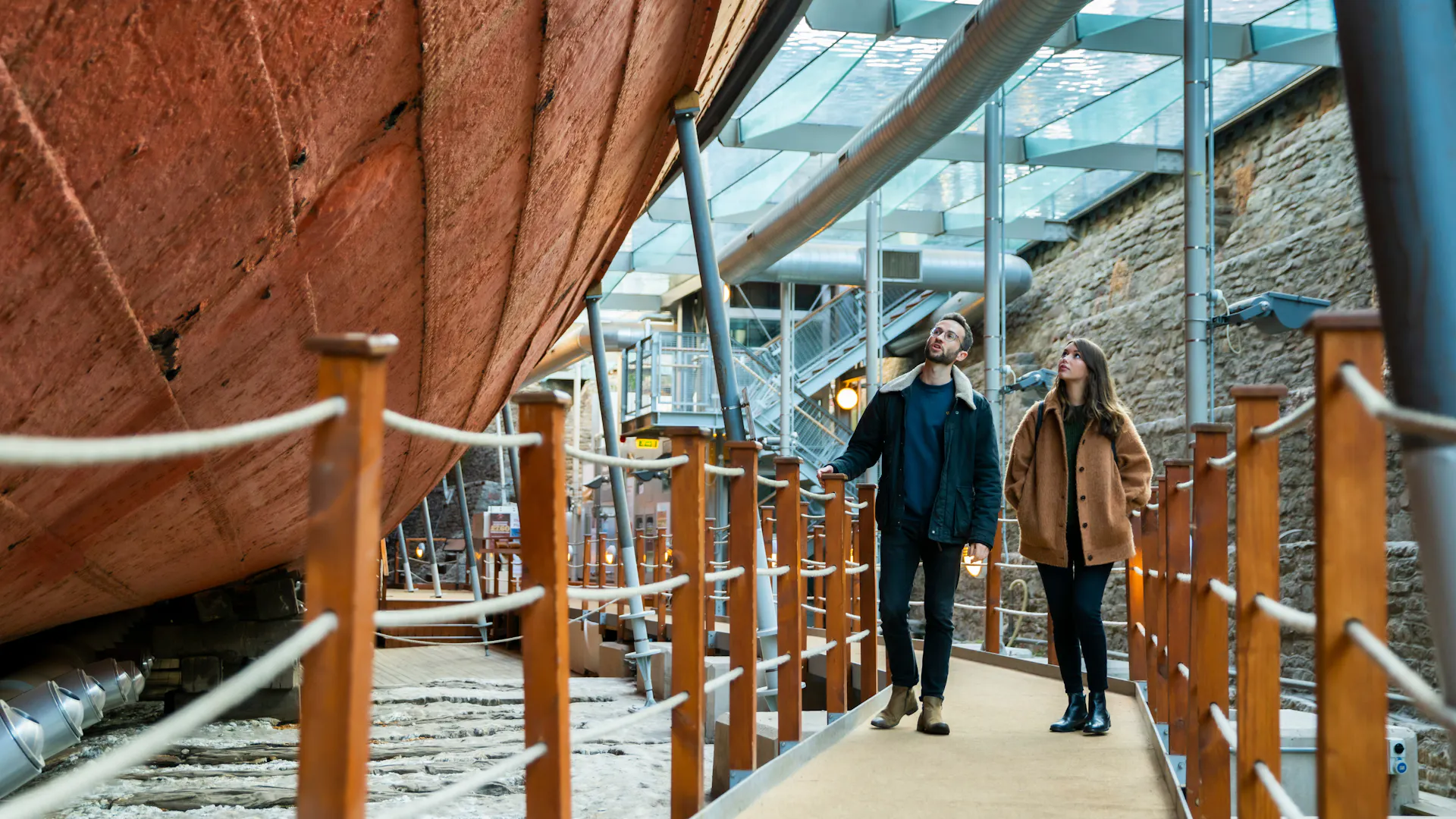
This Christmas, Bristol Dockyards invites you to experience Sailing the Stars, an immersive light experience transforming the historic dockyards and iconic SS Great Britain from 25 November 2026 to 10 January 2027.
Inspired by the real stories of passengers who sailed aboard the SS Great Britain, five celestial installations bring the night sky to life, from glowing constellations to the guiding light of Polaris.
But these aren't simply beautiful stars lighting the winter sky. For Victorian sailors and passengers, the stars were trusted companions. They guided ships across oceans, marked the passing of time and offered comfort when journeys stretched for weeks and familiar shores disappeared from view.
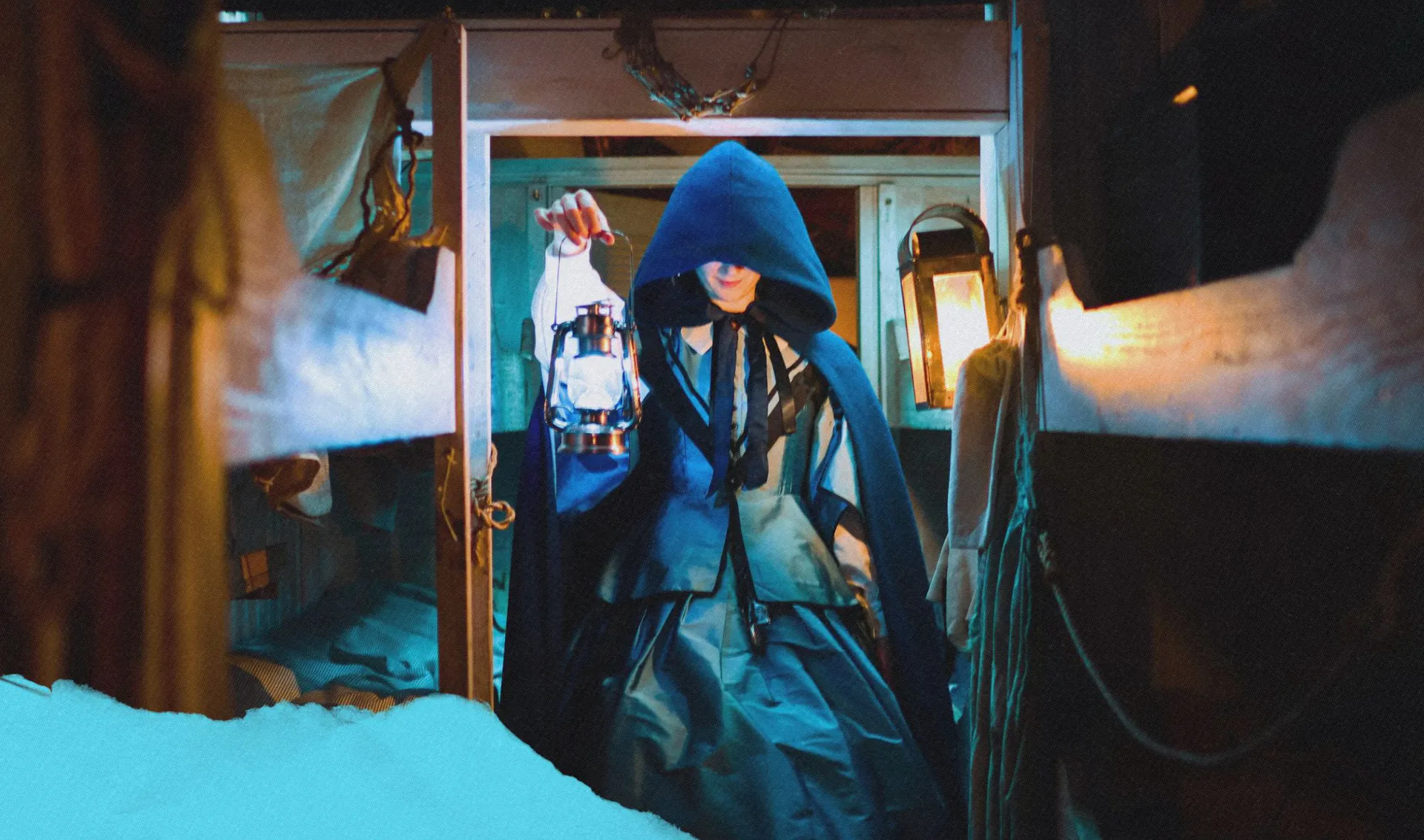
Imagine sailing towards an unknown destination with little to occupy your time but conversation, reading, card games and the endless night sky overhead.
The Victorians didn't just revolutionise shipbuilding with the SS Great Britain, the first iron steamship to cross the Atlantic. They were also captivated by the wonders of the universe. The nineteenth century saw major astronomical discoveries, including Neptune and numerous asteroids, while astronomy societies flourished across Britain.
That fascination can be found in the writings of SS Great Britain's passengers, many of whom spent hours observing the stars from the deck during long voyages. You could call it the Victorian equivalent of Netflix!
Today, Sailing the Stars reimagines that sense of wonder through immersive light, inviting you into a world where astronomy and immersive light reveal history in a whole new way.

1. The Plough: A Guiding Star for Sailors
Look up and discover The Plough, one of the night sky’s most recognisable constellations. Formed by seven stars in Ursa Major, or the Great Bear, it has guided stargazers for generations.
For passengers aboard the SS Great Britain, the stars offered a connection to the world beyond the ship. In 1873, Irish nun Mary Paul Mulquin recorded gazing at the night sky with fellow passengers as they sailed from Liverpool towards Melbourne, Australia:
“Even after night prayers, there she lay calling our attention to the stars – the Plough, Orion’s Belt, which names she seems to have learnt by heart.”
Find The Plough installation at the Dockside Crane, a historic Scotch derrick used for unloading cargo from ships. Built in 1923 by Anderson-Grice of Carnoustie, Scotland, it later served shipbuilders Charles Hill & Sons in their day-to-day dockyard work.

2. The North Star (Polaris): A Familiar Light Across the Seas
Goodbye to familiar stars
As the SS Great Britain crossed the oceans, familiar stars began to fade from view, prompting passengers to reflect on the lives they were leaving behind. For centuries, Polaris, better known as the North Star, had offered sailors a constant navigational guide, helping them find their way north. But for one young passenger, it meant something more.
In 1853, 19-year-old Robert Saddington sailed from Liverpool aboard the SS Great Britain, bound for a new life in Australia. Travelling alone, he struck up a friendship with the Menzies family from Bristol. In his diary, Robert described Polaris as an “old friend”, reflecting on the possibility of leaving the familiar star behind forever as he journeyed towards the unknown Southern Hemisphere.
His story would become closely connected with the Menzies family. After arriving in Sydney, Robert married Janet Menzies, and together they established successful businesses.
Find the North Star installation at the bow of the ship, inspired by the many passengers who gathered there to watch the wonders of the sea. From flying fish and porpoises to icebergs and crashing waves, the view was never dull. Steerage passenger Allan Gilmour recalled one particularly memorable encounter:
“Went to the Forecastle to admire the beautiful white waves but were very soon repaid for our trouble by a large wave coming dashing over her bows completely wetting us to the skin.”

3. The Aurora: Dancing Lights Across the Southern Sky
Few natural spectacles are as mesmerising as the aurora. Ribbons of green, purple, blue and pink dance across the night sky, creating an otherworldly display. Known as the Aurora Borealis in the north and Aurora Australis in the south, these dazzling lights occur when charged particles from the Sun interact with gases in Earth's atmosphere.
In April 1857, SS Great Britain surgeon Samuel Archer witnessed this extraordinary phenomenon while travelling south. After spending his days caring for passengers, he often headed to the deck to observe the marine life and changing world around him.
On 12 April, his diary captured a particularly remarkable evening. The display was so unusual that even the ship's captain and Mr Chapman had never witnessed one in those southern waters before:
“This evening we saw the aurora borealis – a rather uncommon sight in the south, at least according to the Captain and Mr Chapman who had never seen it before here.”
Just a week later, the SS Great Britain arrived in Sydney.
Experience your own celestial spectacle on the ship's Promenade Deck, once a lively social space for passengers, now transformed by a dazzling display of dancing, star-like light.

4. Orion: Discover the Hunter in the Night Sky
A familiar sight during winter, Orion is one of the most recognisable constellations in the night sky. Its distinctive hourglass shape and three stars forming Orion's Belt have inspired stories across cultures and generations.
In Greek mythology, Orion was a hunter and the son of Poseidon, god of the sea. The constellation holds a particularly striking connection to the sea. In one version of the myth, Orion attempts to escape a giant scorpion by jumping into the ocean, before meeting his fate.
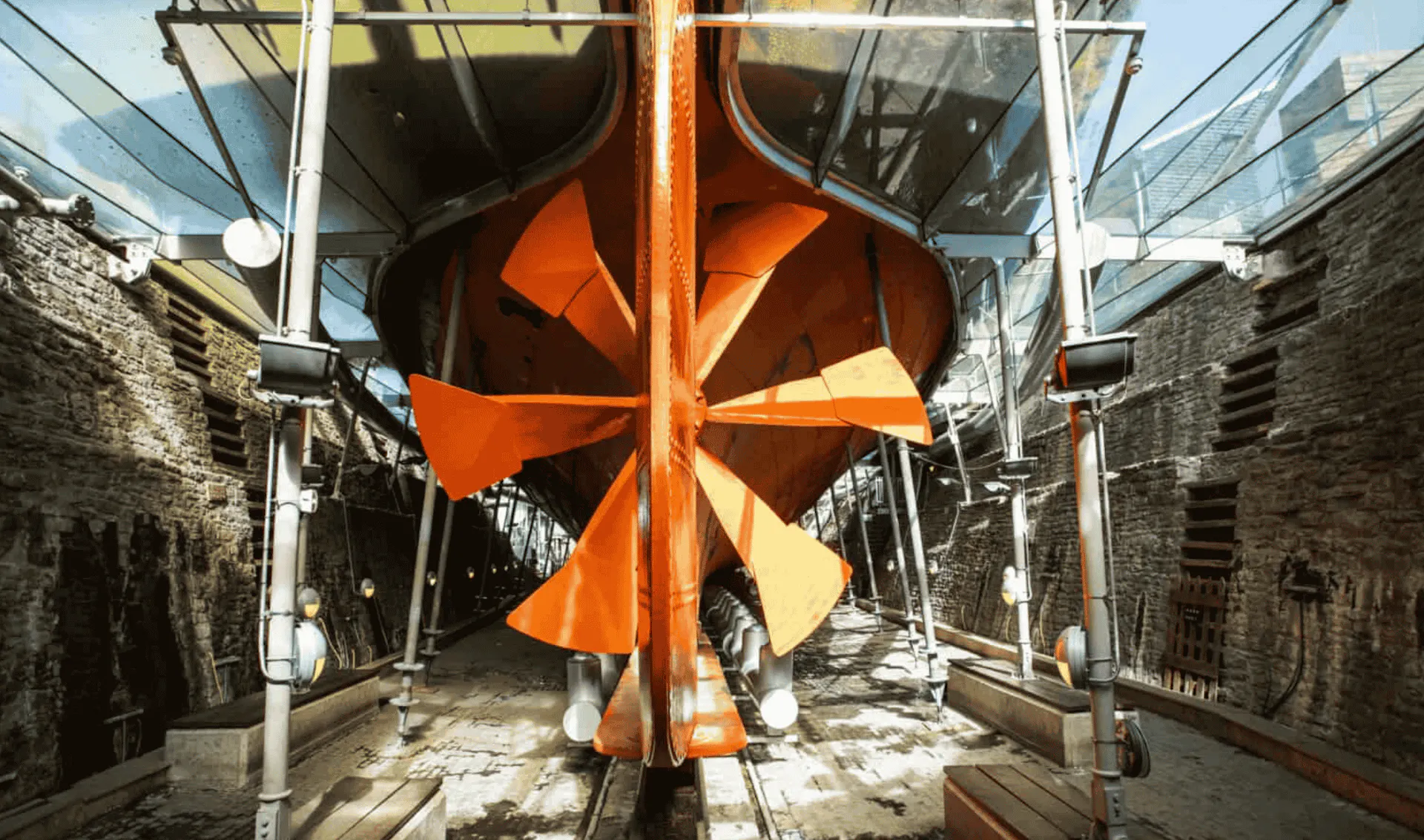
At Bristol Dockyards, Orion takes on a new dimension. Suspended beneath the glass sea in the historic dry dock, the installation is reflected across the mirrored surface above, revealing the constellation from multiple perspectives.

5. The Southern Cross: A Constellation of Home and Belonging
One sky, two hemispheres.
As the SS Great Britain crossed the equator, passengers were treated to a rare sight: constellations from both the northern and southern hemispheres visible in the night sky at the same time. In 1854, this remarkable milestone fell on Christmas Day as the ship travelled from Australia back to England, giving passengers two reasons to celebrate!
For some, the Southern Cross became a poignant reminder of the lives they were leaving behind. In 1861, passenger Rachel Henning recorded seeing the constellation alongside the familiar Great Bear for the first time that voyage:
“It was a beautiful evening and I saw the 'Southern Cross' for the first time this voyage. Opposite it in the north, but turned uncomfortably upside down and terribly near the horizon was the dear old 'Great Bear', a far more beautiful constellation in my eyes. I wonder when I shall see it again?”
Eight years later, Charles Albert Chomley shared similar feelings as he sailed from Australia aboard the SS Great Britain to visit family in Ireland. After 13 years beneath southern skies, leaving the constellation behind proved unexpectedly emotional:
“When I lay last night and looked at the southern cross, a constellation that has been shining over me and mine for the last thirteen years, and thought that I would be separated from it and them [...] I felt differently from anything I ever before experienced.”
Discover the Southern Cross installation in the ship's Forward Hold, where you can recreate the shape of the Crux constellation using the torches provided.
Thank you to Cerys Gardner & Scott Hazzell for helping bring this piece together.

Ready for a Christmas adventure written in the stars?
Follow in the footsteps of the SS Great Britain's passengers and discover five extraordinary celestial light installations at Bristol Dockyards.
Book your tickets online and save up to 15% on your visit. Make even bigger savings with our family ticket bundles.
Book your Sailing the Stars tickets | 25 Nov - 10 Jan 2027