Travelling to Bristol? Connect With Your History at Bristol Dockyards
Did Your Family Travel on the SS Great Britain?
From New York to Melbourne, India to the Falkland Islands, the SS Great Britain connected people, places and cultures across the world. During her remarkable career, Brunel's iconic ship carried thousands of passengers and crew on journeys of migration, service, trade and adventure, helping to shape communities across five continents.
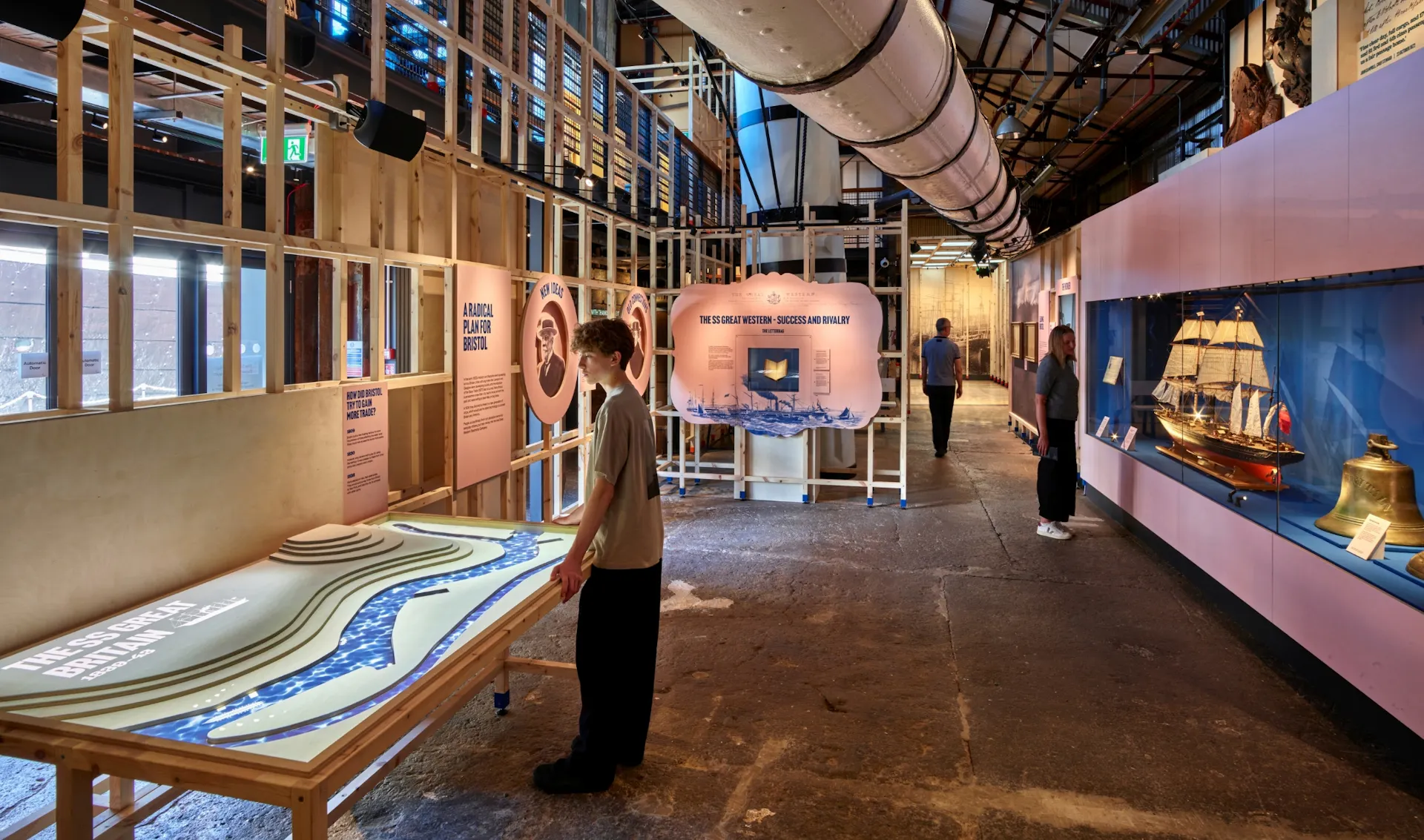
Today, those lives can be explored through passenger records, diaries, letters and photographs preserved by the Brunel Institute and brought to life in the new museum. The Global Stories research project continues to uncover fascinating histories, revealing the experiences of people who travelled aboard the world's first great ocean liner.
Whether you're visiting Bristol from around the corner or across the globe, explore how this pioneering ship helped make Bristol one of the great crossroads of the nineteenth-century world. You may even discover a connection of your own along the way.
Visiting from Bristol?
Standing beside the historic dry dock, it's easy to imagine the excitement that surrounded the launch of the SS Great Britain in 1843.
Built by hundreds of local shipbuilders, engineers, riveters, carpenters and labourers, she represented one of the greatest engineering achievements of the Victorian era. Every plate of iron, every timber and every rivet was assembled here in Bristol, creating the world's first iron-hulled, propeller-driven ocean-going steamship.
Behind this engineering triumph were thousands of Bristolians whose craftsmanship helped change international travel forever.
Visiting from London?
Long before seamless travel became the norm, Isambard Kingdom Brunel imagined a connected journey linking rail and sea. He envisioned passengers leaving London Paddington on the Great Western Railway, travelling west to Bristol, and continuing across the Atlantic aboard the SS Great Britain to New York. This integrated transport network was revolutionary for its time, bringing Britain's capital within closer reach of one of the world's fastest-growing cities and establishing Bristol as a gateway to America. Brunel's ambition helped transform how people travelled, traded and connected across continents. If you're visiting from London today, you're following a route inspired by the very vision Brunel set in motion almost 200 years ago.
Visiting from the United States or Liverpool?
New York was one of the SS Great Britain's first international destinations and a key part of Isambard Kingdom Brunel's vision to connect Britain and America through faster, more reliable travel. When the ship entered service in 1845, she became the first large iron steamship powered by a screw propeller to cross the Atlantic, helping to usher in a new era of ocean travel.
Although Brunel originally envisioned a seamless journey linking London, Bristol and New York, the ship's transatlantic service ultimately operated between Liverpool and New York. From there, passengers travelled for business, trade, family connections and new opportunities, helping to strengthen ties between Britain and the rapidly growing United States at a time when global travel was being transformed.
Today, visitors can walk the same decks where travelers once set sail for New York, explore the cabins and social spaces where life unfolded on board, and discover the engineering innovation that changed transatlantic travel forever. Along the way, you'll uncover stories of ambition, migration and adventure that connected Bristol and the UK with communities across North America and helped make a growing world feel a little smaller.
Visiting from Australia?
Many of the most powerful stories preserved in the archives belong to emigrants travelling to Australia.
During the Australian gold rush, the SS Great Britain became one of the world's most famous emigrant ships, carrying thousands of families to Melbourne in search of new lives.
Among them was Rachel Henning, whose diary vividly recounts everyday life aboard ship during her 1861 voyage. Visitors can read her observations about friendships, homesickness, storms and the excitement of reaching Australia.
Artist Elizabeth Parsons also travelled aboard with her family in 1870. Her beautifully illustrated sketchbooks capture both life at sea and the landscapes of Australia that became her new home.
For many visitors from Australia, these historical records echo similar journeys made by parents, grandparents and great-grandparents.
Visiting from France?
Visitors from France may be surprised to discover that one of Britain's greatest engineers came from a French immigrant family. Isambard Kingdom Brunel's father, Sir Marc Isambard Brunel, fled revolutionary France in the late eighteenth century before eventually settling in Britain, where his talent and ingenuity would help shape the nation's engineering future.
The Brunels' story is one of innovation, ambition and opportunity across borders. Marc Brunel became a pioneering engineer and inventor, while his son Isambard would go on to transform Victorian Britain through extraordinary projects including the Great Western Railway, the Clifton Suspension Bridge and the SS Great Britain.
At the Being Brunel Museum, visitors can discover the remarkable story behind this influential family through personal letters, drawings, possessions and archives. Beyond their engineering achievements, the museum reveals the people behind the names, exploring their family life, relationships, successes and setbacks.
Stories of Service: From Crimea to India
Not every voyage aboard the SS Great Britain was made in search of a new life. During the Crimean War, she was converted into a troop transport, carrying soldiers, supplies and wounded servicemen between Britain and the Black Sea. One voyage in 1855 was affected by a cholera outbreak on board, offering a stark reminder of the realities of military life at sea.
After the war, the ship continued to serve Britain's global military network, transporting troops and personnel to destinations including India before beginning her long career carrying emigrants to Australia.
These journeys remind us that the SS Great Britain carried far more than passengers. She carried hope, but also grief; opportunity, but also duty. Every voyage tells a different story, and together they reveal how one ship connected communities across the world through moments of migration, innovation and conflict.