Brunel’s SS Great Britain, 1843
The Object
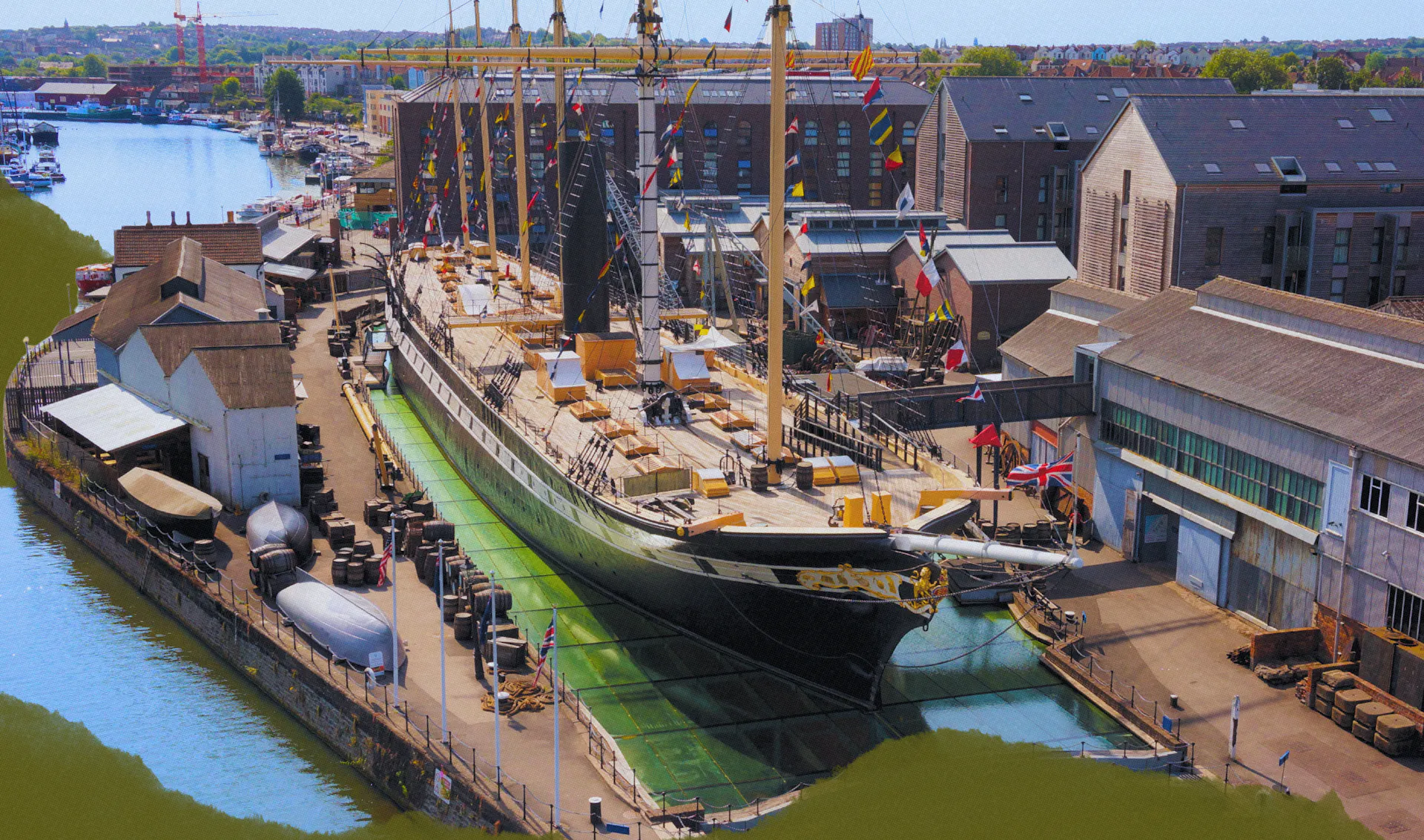
The SS Great Britain is the largest and most significant object in our collection. Designed by engineer Isambard Kingdom Brunel and built by shipbuilder William Patterson, the ship took four years to construct in a specially built dry dock at the Great Western Dockyard in Bristol Harbour.
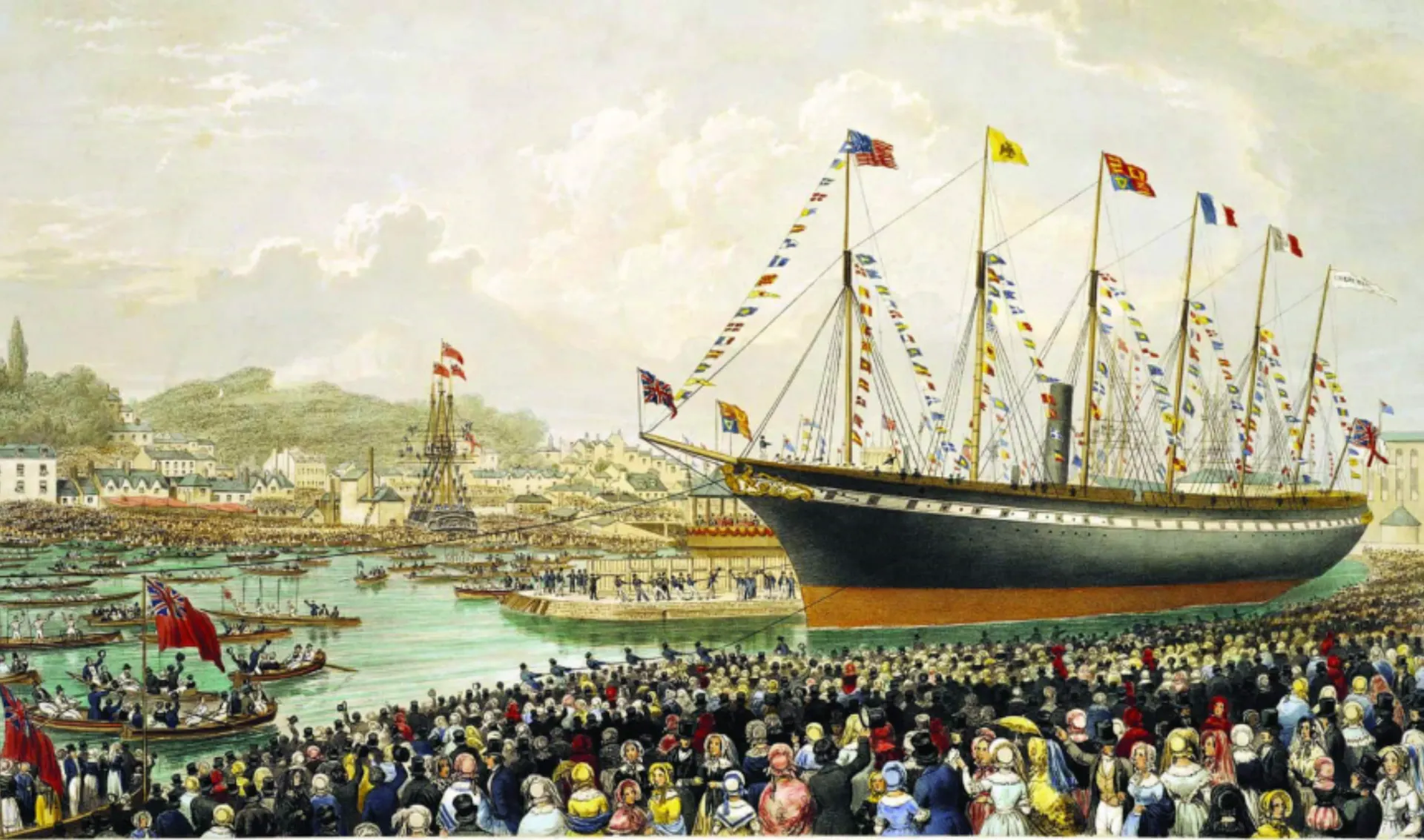
Launched on 19 July 1843, she was the largest ship in the world and the first iron hulled, propeller driven steamship capable of crossing an ocean.
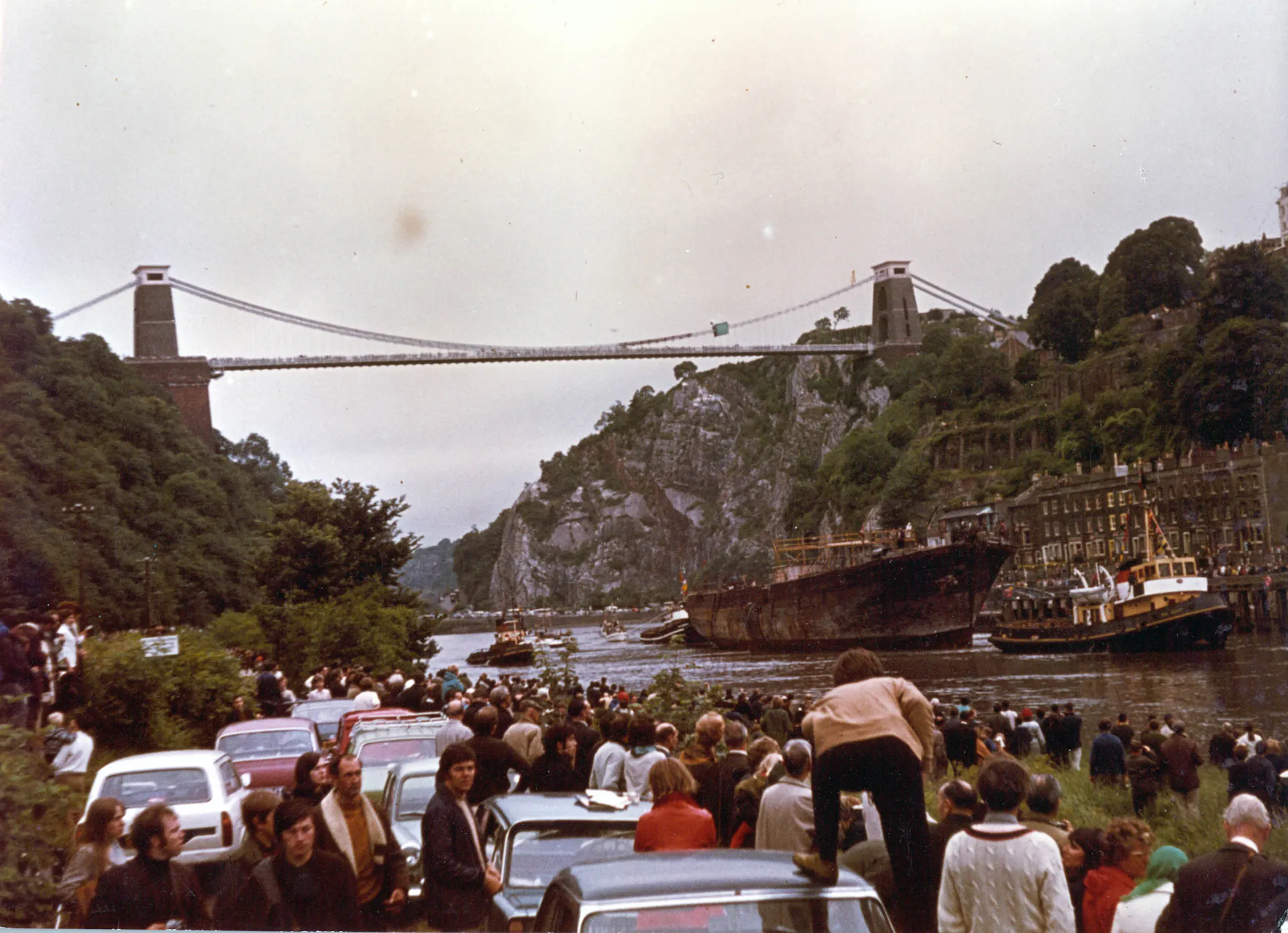
Throughout her working life, she sailed more than 1,000,000 nautical miles before spending over 80 years in the Falkland Islands, where she was gradually abandoned. In 1970, the SS Great Britain was brought home to Bristol and returned to the very dry dock where she was built. Today, after extensive conservation, she appears much as she did on her launch day in 1843.
Wood to Iron
After the success of his first ship, the PS Great Western, Brunel began designing a second, larger vessel. His original plan was for a wooden paddle steamer, until a chance event changed everything.
In 1838, the iron hulled ship Rainbow visited Bristol. Curious about its construction, Brunel sent Captain Christopher Claxton and William Patterson to examine the vessel on a short voyage. Their findings helped Brunel argue that iron, not wood, was the future of shipbuilding.
Iron offered several advantages:
- It was stronger and more durable than wood.
- Thinner iron plates meant the ship could be lighter, yet roomier.
- More internal space allowed additional room for cargo, passengers and coal, increasing range and efficiency.
Despite already purchasing large quantities of oak, Brunel persuaded the company’s board to adopt this groundbreaking design. The SS Great Britain became the world’s first ocean‑going iron ship, revolutionising shipbuilding for decades to come.
A Riveting Process
During the construction at Bristol’s Great Western Dockyard, it would have been a noisy, demanding and potentially dangerous place. Much of this was due to the intense hot‑riveting process used to create the ship’s iron hull.
Large iron plates shipped from Coalbrookdale in Shropshire arrived by barge and were delivered to the dockyard. Each plate had pre‑punched holes ready for rivets. To attach a plate, shipbuilders positioned it so that it overlapped the previous one and held it in place with a temporary bolt.
A rivet was then heated in a furnace until it glowed white hot. It was carried or thrown to the riveter working on the hull, who quickly drove it through the holes in the overlapping plates. As the rivet cooled, it shrank, pulling the plates tightly together to create a watertight seal. Once the rivets were secure, the temporary bolt was removed and replaced with a final rivet.
By the time the ship was completed, workers had installed roughly 1,000 iron plates and well over 100,000 rivets. After four years of labour, the SS Great Britain was launched into Bristol Harbour on 19 July 1843, marking the beginning of a new era in maritime engineering.