Passenger Elizabeth Parsons’ Drawing Book, 1882
The object
Originally from the UK, landscape artist Elizabeth Parsons travelled to Australia with her husband George and their three children on board the SS Great Britain in 1870, after George lost his job. The journey from Liverpool to Melbourne took 58 days.
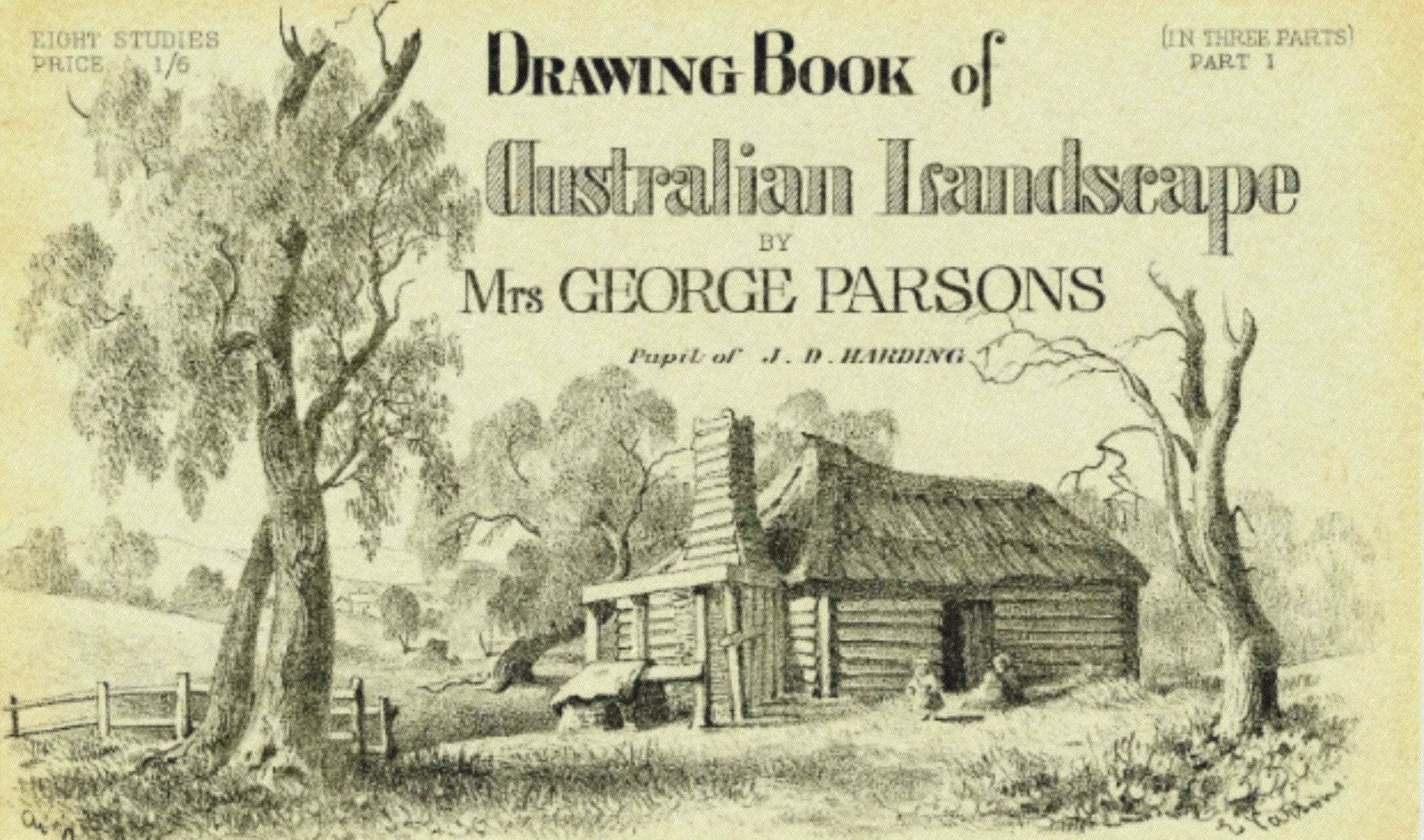
This drawing book contains eight lithograph prints showing scenes from around the Australian state of Victoria, including buildings such as sheds, a pier and a belfry built into a tree trunk.
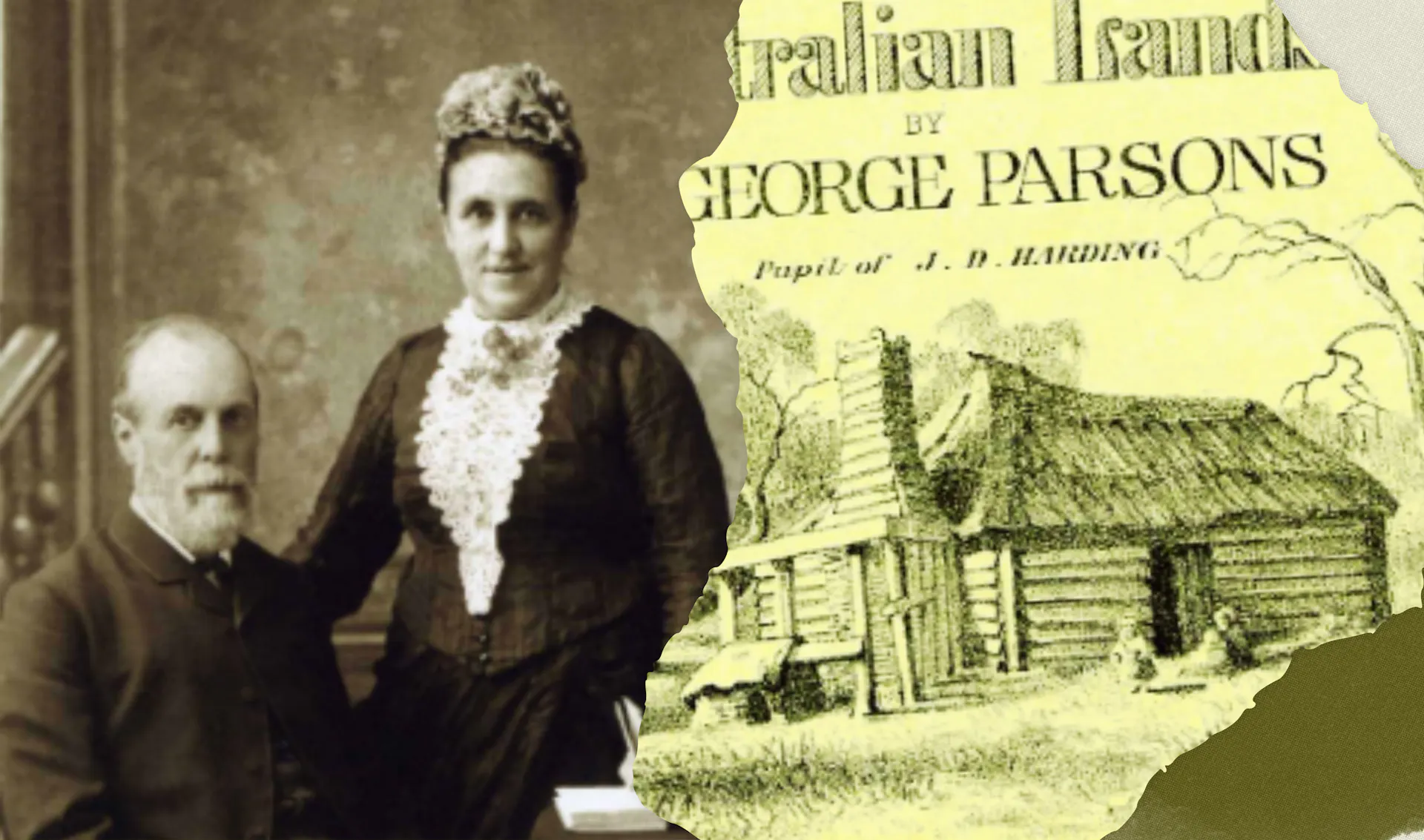
Each print is signed “E. Parsons”, although the works were published under the name Mrs George Parsons, reflecting the common practice at the time of referring to married women by their husband’s name rather than their own.
Challenging expectations
Elizabeth was born Elizabeth Warren on 27 September 1831 and showed an early talent for art. As a child, she carried a sketchbook wherever she went and, after finishing boarding school, decided to pursue a professional career as an artist. She trained with other landscape painters and travelled widely in the UK and France, sketching and painting outdoor scenes.
Elizabeth married George Parsons in 1868 and continued to work as an artist, something that was unusual in the Victorian era, when many women were expected to give up paid work to focus on domestic life. In 1869, she held her first major exhibition, and when George later lost his job, her art became the family’s main source of income.
In 1870, the family emigrated to Melbourne, hoping for better opportunities. They travelled second class on the SS Great Britain, and the journey was particularly challenging for Elizabeth, who was pregnant at the time.
Just one month after arriving in Australia, Elizabeth showed her work to an art critic and began breaking into the male‑dominated art world. Her work was soon exhibited, and she later became the first female member of the Victorian Academy of Art, as well as a respected art teacher.
Today, Elizabeth Parsons is remembered as an important Australian artist, with works held in collections including the National Gallery of Victoria.
Putting women back into history
For much of the Victorian period, a woman’s legal identity and social status were tied to her husband’s. Until 1870, married women could not own property, keep their earnings or control their own possessions. Even their public identity was absorbed into that of their husband, which is why Elizabeth Warren became known professionally as Mrs George Parsons. Legal reforms in 1870 and 1882 finally gave married women their own legal status.
When families travelled the SS Great Britain, ship records often listed only the husband’s name, with wives recorded simply as “Mrs”. This makes it much harder to uncover women’s histories.
Today, a team of volunteers at SS Great Britain is working to recover these lost identities by researching marriage certificates and passenger records. As a result, the names of over 100 previously unidentified women who travelled on the ship have been added to the Global Stories database, restoring them to the history of the journeys they made.