Inside the Thames Tunnel, 1830
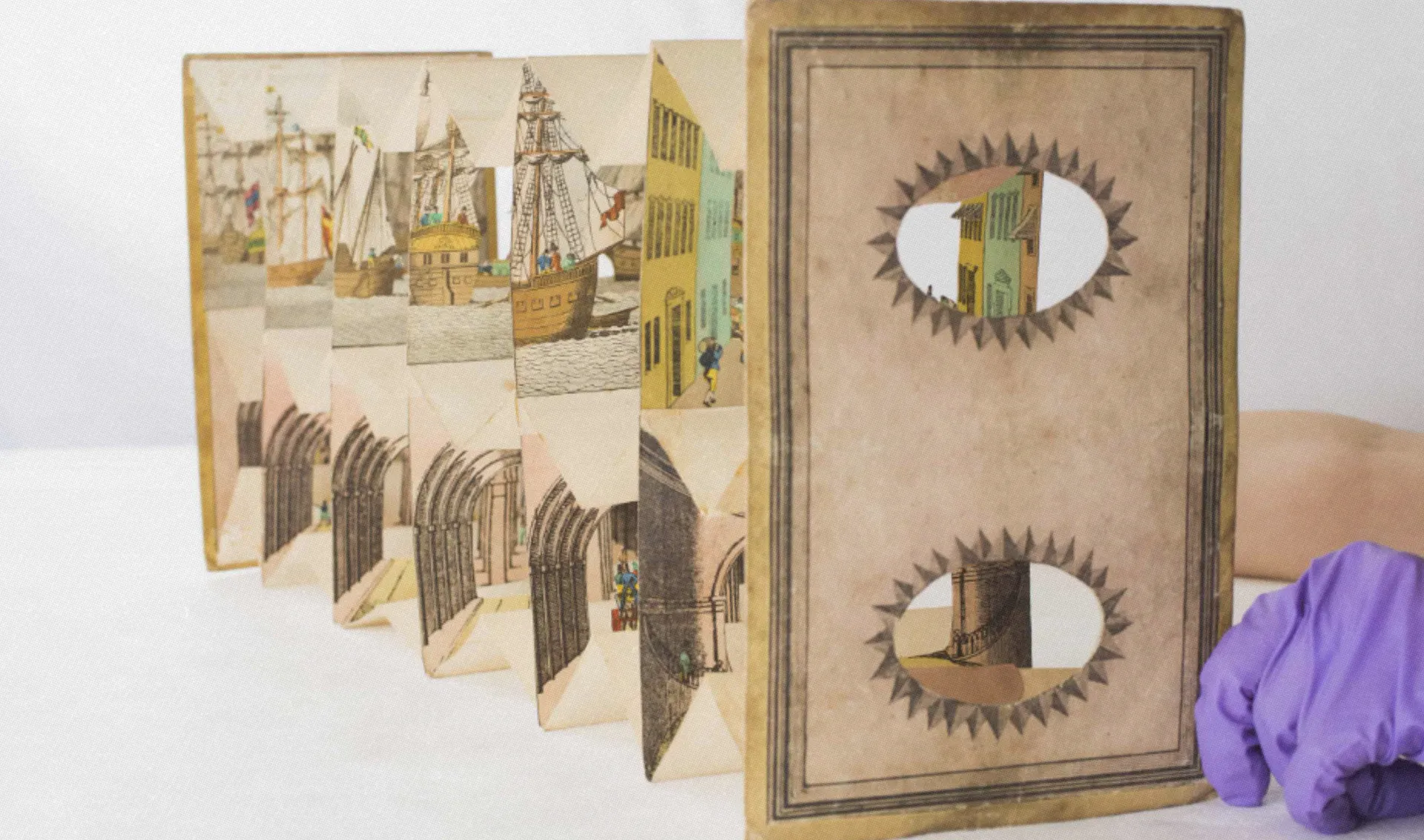
The Object
This delicate double peepshow was likely sold to raise both money and public interest in the construction of the Thames Tunnel, designed by Marc Brunel, father of Isambard Kingdom Brunel. The tunnel was intended to link the two sides of London across the River Thames, an ambitious idea at the time.
Published in Germany around 1830 and made entirely from paper, the peepshow presents an idealised view of the tunnel once complete. It contains two peepholes offering different scenes:
- Top peephole: a bustling River Thames filled with boats of various sizes carrying goods and passengers.
- Bottom peephole: a calm interior view of the Thames Tunnel, showing pedestrians and horse‑drawn carriages moving through the completed passageway.
In reality, the Thames Tunnel was nearly 400 metres long and is still in use today as part of the London Overground railway network.
The Thames Tunnel
Marc Brunel’s plan to build a tunnel beneath the River Thames emerged at a time when London’s bridges were becoming increasingly overcrowded. A tunnel large enough to carry horses and wagons beneath the river was seen as a potential solution, but no one had ever built such a long underwater tunnel before. Many believed it couldn’t be done.
The riverbed posed serious challenges. Its soft material made it difficult to support the tunnel walls, and the shale through which workers dug leaked water continuously. Marc Brunel invented a pioneering “tunnelling shield”. The shield was a protective frame that allowed labourers to dig while reducing the risk of collapse, but progress remained painfully slow and conditions were extremely hazardous.
In 1826, the project’s chief engineer, William Armstrong, became ill and left the work. His place was taken by Isambard Kingdom Brunel, just 20 years old at the time. Brunel worked exhausting hours underground, sometimes staying below for 30 hours straight.
The tunnel suffered several major floods. During one in 1828, Brunel was seriously injured and forced to leave the project. Marc Brunel continued the work, but progress stalled repeatedly, including a six‑year break when funding ran out.
Finally, after nearly 20 years, the Thames Tunnel opened in 1843 and public interest was immense. Around 50,000 people visited in the first few days, with vendors filling the tunnel selling souvenirs, including peepshows like this one.
However, due to lack of funds, the planned ramps for horses and carriages were never completed. As a result, wheeled traffic could not use the tunnel, meaning it never fully achieved its original purpose of easing congestion across the river.
Peepshows
Peepshows invite viewers to look into a miniature world. They often depict detailed scenes, from royal ceremonies to city landmarks, and became especially popular in the early 1820s. Made of paper, they were affordable, lightweight, and could be folded flat for easy storage.
As excitement for the Thames Tunnel grew, both in Britain and abroad, publishers produced many different peepshows showing how the completed tunnel might look. These scenes typically included pedestrians, carts, carriages, and even technical features such as the tunnelling shield or the site of the 1827 flood.
Visitors could tour the part‑built tunnel from 1827, paying one shilling each. Souvenir guides and keepsakes sold in the tunnel helped raise money and sustain enthusiasm for the engineering project. Peepshows quickly became one of the most popular mementos, allowing people to take home a tiny preview of this groundbreaking work of engineering.